Category: Class-8 Geography

  • Geography Chapter-03

    A. 1. b. 2. c. 3. b. 4. a. 5. c.
    B. 1. biosphere 2. ecosystem

    1. land
    2. temperature, moisture
    3. leaves, shed
    4. tropical, rainfall
    5. temperate 8. extinct
    6. man-made 10. Taiga
      C. 1. T 2. T 3. F 4. T 5. T
      D. 1. d. 2. e. 3. b. 4. a. 5. c.
      E. 1. Which trees are found in temperate
      forest?
      Ans – The trees that are found in
      temperate forests are evergreen
      oaks, laurels and magnolia, pine
      trees birch, beech, ash, elm and
      maple.
    7. Endangered species are those plants
      and wildlife that are so small in
      number that they face the risk of
      becoming extinct.
    8. Land is used by the humans in a
      variety of ways. It is used for
      making houses, for agriculture, for
      making roads, for setting up
      industries and for making pastures
      for their animals to graze.
    9. An ecosystem includes all of the
      living things (plants, animals, and
      organisms) in a given area,
      interacting with each other, and also
      with their non-living environments
      (weather, earth, sun, soil, climate,
      atmosphere).
    10. National Parks have been found by
      the governments with the objectives
      to set aside areas to preserve the
      natural environment, for the purpose
      of recreation and public enjoyment
      for historic and scientific interests.
      F. 1. Types of Forests
      Forests are different in different
      parts of the world. There are three
      main types of forests.
      Tropical Forests: These are found
      between 23°N and 23°S latitudes.
      Some of the forests here are
      evergreen while others are deciduous.
      The tropical evergreen forests are
      found where the annual rainfall is
      very heavy and temperatures are
      high throughout the year. The
      tropical deciduous forests are
      found in areas with lesser rainfall
      and a hot climate. These forests are
      commonly called monsoon forests.
      Temperate Forests: These are
      found in the mid-latitudes, between
      30° and 50° latitudes both north and
      south of the Equator. Here again,
      you will find both evergreen and
      deciduous forests. The temperate
      evergreen forests are found in areas
      with mild winters and abundant
      rainfall throughout the year. These
      are generally of two types—
      broadleaf and needleleaf. The
      temperate deciduous forests are
      found in areas with wet summers
      and cool frosty winters.
      Taiga Forests: These forests are
      found between 50° and 70° latitudes
      in Eurasia and also in North
      America, where they are referred to
      as boreal forests. These are
      evergreen coniferous forests with
      cone-shaped trees that have straight
      trunks and small narrow needle-like
      leaves. common animals found
      here.
    11. Human beings can be held
      responsible for the extinction of
      various animals because they have
      caused the destruction of their
      habitat, pollution and have over
      exploited certain species.
    12. Steps taken by the conservationists
      to protect wildlife and the plants are
      as follows-
      • Demarcating forests as protected
      areas and preventing illegal logging.
      • Using recycled paper to reduce
      pressure on trees.
      • Preventing wildlife poaching.
      • Protecting endangered and threatened
      species in reserves to allow breeding.
      • Preventing hunting and smuggling of
      rare birds and animals.
    13. The various steps taken by the
      Government of India to protect the
      plant and the animal species are as
      follows-
      • National forestry action programme
      • National wildlife action plan
      • India also follows CITES and other
      international l aws and agreements
      on conservation
      • ‘Van Mahotsav’ is an annual festival
      celebrated in many parts of the
      country to encourage planting of
      trees
      • Wildlife week that is observed in the
      first week of October every year to
      increase awareness about wildlife.
    14. Forests are the natural habitat of
      plants and wildlife. Humans are
      dependent on forests for their food,
      medicines, fuel, clothing and shelter.
      Many people are dependent on the
      forests for their livelihoods. Besides,
      forests help prevent soil erosion,
      help maintain the water cycle and
      check global warming by using
      carbon dioxide in photosynthesis
      and renewing the oxygen supply in
      the atmosphere. Wood from forests
      is used to make paper, pencils and
      furniture. Forests also help keep the
      environment clean by muffling
      noises, buffering strong winds and
      taking in carbon monoxide. It is
      important to conserve and preserve
      forests and wildlife to allow
      ecosystems to function.
      G. 1. Tropical Forests–These are found
      between 23°N and 23°S latitudes.
      Some of the forests here are
      evergreen while others are deciduous.
      Temperate Grasslands–These are
      found in the mid-latitudes, between
      30° and 50° latitudes both north and
      south of the Equator.
    15. Biosphere Reserves –This is an
      area set aside as a protected area for
      the preservation of flora, fauna and
      wildlife.
      National parks This is a special
      area set aside by the national
      governments to preserve the natural
      environment.
      H. 1. Because these forests are open
      forests with not very tall trees,
      allowing sunlight to reach the lower
      layers causing a good growth of
      shrubs and bushes.
    16. Because the rainfall in the taiga
      region is sparse and so the leaves
      are shaped in the form of needles to
      minimize precipitation.
    17. Because they are found in 30 degree
      and 50 degree latitudes between
      north and south of the Equator
      where the winters are mild and there
      is abundant rainfall throughout the
      year.
      DO AND LEARN
      Assertion And Reasoning
    18. c. 2. b.
      Application/Competency Based Question
      Many practices of the tribal
      communities who live in the forests
      were banned by the colonial
      government as well as the current
      government. However, they continue
      to play an important role in the
      conservation of the forests. How?
      Ans – Tribal communities often have
      traditional knowledge and practices
      that are closely tied to sustainable use
      and conservation of forests. Despite
      bans imposed by colonial and current
      governments, these communities
      continue to play a crucial role in forest
      conservation by practicing traditional
      methods of resource management,
      such as rotational farming, selective
      harvesting, and indigenous fire
      management techniques. Their deep
      connection to the land and ecosystems
      allows them to maintain biodiversity,
      prevent forest degradation, and
      sustainably use natural resources
      without causing long-term harm, thus
      contributing significantly to the overall
      health and preservation of forests.
      Hots
    19. Natural vegetation is crucial because it
      provides habitats for wildlife, supports
      biodiversity, and stabilizes ecosystems.
      It plays a vital role in regulating climate
      by absorbing carbon dioxide and
      releasing oxygen. Additionally, natural
      vegetation helps in preventing soil
      erosion and maintaining water cycles,
      thus sustaining agricultural productivity.
      Overall, it is essential for ecological
      balance and human well-being.
    20. Conservation of wildlife is essential to
      preserve biodiversity, ensuring
      ecosystems remain resilient to
      environmental changes. Wildlife provides
      ecological services like pollination, seed
      dispersal, and nutrient cycling crucial for
      agriculture and human survival.
      Additionally, it supports industries like
      eco-tourism, contributing to local
      economies. Protecting wildlife also
      safeguards cultural and spiritual values
      associated with diverse species.
      Picture Based Questions
    21. Rhinoceros
    22. When a species goes extinct, it reduces
      the overall biodiversity, which can
      impact ecosystem resilience and the
      ability to adapt to environmental
      changes. It also diminishes the potential
      for scientific research and discoveries,
      as well as the cultural and aesthetic
      value of diverse plant and animal life.
    23. They’re important grazers, consuming
      large amounts of vegetation, which
      helps shape the African landscape. This
      benefits other animals and keeps a
      healthy balance within the ecosystem.
      Local people also depend on the natural
      resources within rhino habitat for food,
      fuel and income.
    24. The Ministry has also launched the
      “National Conservation Strategy for the
      Indian One-Horned Rhinoceros” with
      the goal to repopulate Rhinoceros
      population in those areas also which
      used to hold the Rhinoceros earlier by
      augmenting the existing conservation
      efforts and strengthening them through
      scientific methods.
      WORKSHEET
      A. 1. natural vegetation
    25. Wildlife 3. ecosystems
    26. evergreen, deciduous
      B. 1. T 2. T 3. T 4. T
      C. 1. d 2. d 3. d 4. a
  • Class 8 Geography – Chapter.2 Land , Soil and Water Resources


    A.

    1. c.
    2. b.
    3. d.
    4. d.
    5. a.

    B.

    1. minerals, surface water, population.
    2. uninhabitable
    3. sparsely
    4. humans
    5. Poor, reduced
    6. human activities
    7. degradation
    8. ownership
    9. swamps, marshes, freshwater
    10. hydroelectricity, greenhouse

    C.

    1. T
    2. F
    3. T
    4. F
    5. F

    D.

    1. a.
    2. c.
    3. d.
    4. b.
    5. e.

    E.

    a. Land cover: it is the physical elements like vegetation, buildings, water that covers the land. It depends on the physical factors like topography, climate, availability of water, soil or minerals.


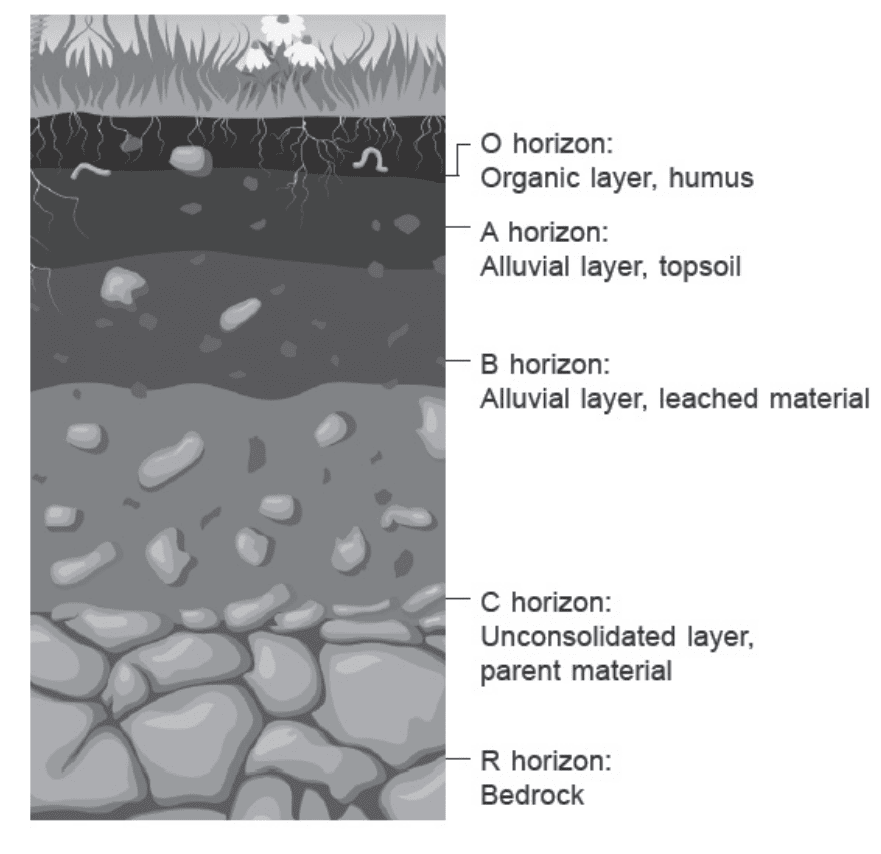
    b. Soil profile: the different layers of the soil like the topsoil, the sub soil and the bed rock is called the soil profile.


    c. Community land: community land is owned and used by the whole community for different purposes like parks, roads, forests etc.


    d. Mulching: it is a simple and a beneficial practice to stabilize soil temperature, retain soil moisture and to reduce soil erosion. It is like a protective layer spread on top of the soil with material that is both organic and inorganic.


    e. Humus: the first layer of the soil, which is extremely fertile, is called the humus.


    f. Rainwater harvesting: it is the most popular way of conserving water especially in the urban areas. In this, the rainwater is collected on the roofs of the buildings and then stored underground for later use.

    1. The factors that define the land use pattern are mostly the physical factors like topography, climate, and availability of water, soil and minerals.
    2. Result of land degradation on human life is huge as land productivity goes down leading to uncertainty about food causing migration and general degradation of the ecosystems.
    3. Diagram Given
    4. Water is available to us in three forms — liquid (oceans, rivers and lakes), gaseous (water vapour in the atmosphere) and solid (ice in the mountains and Polar Regions).
    Answer of Q no.4

    F.

    1. The various factors that determine the formation of soil at a particular place are as follows-
      • Parent rock- which means the original rock from which the soil is formed, which determines the type of mineral content, texture, colour, chemical properties and permeability.
      • Climate- places with warm temperatures and with steady and abundant supply of water speed up the formation of soil.
      • Time- soil takes thousands of years to form, involving a huge amount of time. This leads to the soil changing its colour as well as its properties over a period of time.
      • Topography- this means the physical features like the slope and the steepness of the land which in turn influence the rate at which water flows into or off the soil. For instance a lot of heat and moisture gets trapped in the soil in the plains thus making it richer and fertile.
    2. The following practices are used to control soil degradation like-
      • Ground cover vegetation – which minimizes the erosion of the top soil due to the action of the wind and water.
      • Mulching – which helps in stabilizing the soil temperature, retaining soil moisture and stopping soil erosion. In this method, both organic and inorganic material is used to create a layer that protects the top soil.
      • The contour farming – which is done in a variety of ways like creating contour barriers and contour ploughing, both of which are carried out to stop the erosion of the top soil in the hilly areas by ploughing along the contour slopes.
      • Intercropping – this is another method of growing two or more crops over the same land in the same growing season, with one crop that grows fast and the other that grows slowly.
      • Terrace farming – in this farming, crops are grown on the step like formations along the sides of the slopes in order to prevent or reduce the run off of rain water and carrying of soil with it.
      • Crop rotation – in this method of farming two or more than two crops are grown one after the other in a regular sequence, on the same land. This helps in controlling the insects and the diseases along with preserving the soil nutrients.
      • Drip irrigation – in this water is slowly released to each plant in order to conserve water as well as prevent run off with too much of water.
      • Shelter belts or windbreaks – in this, one or more rows of trees or shrubs are planted, along the field to prevent soil erosion as well as shelter from the wind.
    3. The various ways in which water is used in the present times are as follows-
      • In agriculture, where nearly 70% of water is used for irrigation. The problem is it is being used at a faster rate than it can be replenished with.
      • Hydroelectricity- large scale river valley projects is yet another way of using water. It helps in providing water for irrigation, generates hydroelectricity and controls flood water.
      • Industry- water is also required in the industrial sector and in developed countries; the concentration of water is more in the industrial sector.
      • Besides these, water is also used for drinking, cooking, washing clothes and utensils, bathing and other household uses. Water is also used for transportation and for recreational functions.
    4. The following factors have led to the scarcity of water-
      • Uneven distribution of water throughout the world, causing scarcity of fresh water in most places despite heavy rainfall.
      • Construction of buildings and plantations over swamps and marshy areas has also led to scarcity of water.
      • Climate change is a big factor as it has turned many places into dry places.
      • Unchecked population growth is probably the most important factor behind growing scarcity of water throughout the world.
      • Existing water bodies are constantly being polluted by domestic sewage, organic waste, plant nutrients, toxic chemicals, sediments, heat, oil and radioactive substances that flow into them. This makes water unfit for human consumption as well as it disturbs the ecological balance.
    5. Here are some steps being taken by different countries to conserve water and its quality.
      • Water reuse and recycling
      • Seawater desalinisation
      • Protection of wetlands
      • River cleaning to improve quality of water
      • Afforestation to reduce run-off
      • Rainwater harvesting
      • Encouraging better irrigation practices
      • Addressing causes of pollution

    G.

    1. Deforestation refers to the deliberate clearing of forests or wooded areas, often for agriculture, logging, or urban development, leading to the permanent loss of forest cover and biodiversity. It contributes to habitat destruction, loss of carbon sinks, and soil erosion, impacting local and global ecosystems negatively.
      Afforestation, on the other hand, involves the deliberate planting of trees and establishment of forests in areas where there were none previously. It aims to increase forest cover, restore degraded lands, enhance biodiversity, and provide ecosystem services like carbon sequestration, soil conservation, and water regulation.
    2. Landslide refers to the sudden and rapid movement of a large mass of rock, debris, or soil down a slope, often triggered by heavy rainfall, earthquakes, or human activities. It can result in significant damage to infrastructure, loss of life, and disruption of communities in affected areas.
      Soil erosion, on the other hand, is the gradual wearing away of soil by wind, water, or human activities like farming and construction. It occurs over time and leads to the loss of fertile topsoil, reducing agricultural productivity and increasing sedimentation in water bodies, which can harm aquatic ecosystems.
    3. Private land is used and owned by a person or a group of people for personal use.
      Community land is owned and used by the whole community like parks, roads, forests etc.

    H.

    1. Soil is considered an important resource because it serves as the foundation for global food production, supporting agriculture and sustaining human nutrition.
      Beyond its agricultural role, soil is crucial for maintaining biodiversity and ecosystem health, providing habitats for diverse organisms and contributing to ecological balance.
      Moreover, soil plays a vital role in regulating water availability and quality, influencing groundwater recharge and flood prevention.
      Additionally, soil acts as a carbon sink, helping to mitigate climate change by storing carbon dioxide from the atmosphere.
      Overall, soil is integral to both natural ecosystems and human societies, making its conservation and sustainable management essential for future generations.
    2. Soil varies significantly from place to place due to diverse factors such as parent material, climate, topography, vegetation, and time.
      The original rock from which soil is formed is called the parent rock. This determines the type of mineral content, texture, colour, chemical properties and permeability.
      Climate is one of the most important factors affecting the formation of soil. Warm temperatures, speed up the formation of soil. On the other hand, places with cold climatic conditions like low temperatures and less precipitation slows down soil formation.
      Time is another important factor influencing soil formation.
      The topography or physical features also affect soil formation. The slope and steepness of the land influence the rate at which water flows into or off the soil. A lot of heat and moisture gets trapped in soil in the plains, thus making it richer and fertile. Hillsides may relatively have thinner soil because of erosion wind and water.
    3. Water supplies vary across the world due to diverse factors such as climate patterns, geographical location, hydrological cycles, and human activities.
      Regions closer to the equator generally receive more rainfall compared to those in temperate or polar regions, influencing freshwater availability.
      Geographical factors such as proximity to oceans, mountains, and rivers affect local water sources and distribution.
      Additionally, variations in hydrological cycles, including seasonal precipitation patterns and groundwater recharge rates, contribute to fluctuations in water availability.
      Human activities such as water management practices, irrigation, industrial use, and urbanization further impact water supplies, leading to disparities in availability and quality globally.

  • Chapter-1 Geography ( Natural Resources)


    A. Multiple Choice Questions

    1.

    Answer: d

    2.

    Answer: c

    3.

    Answer: a

    4.

    Answer: a

    5.

    Answer: c


    B. Fill in the Blanks

    1.

    Answer: resource

    2.

    Answer: Time, technology

    3.

    Answer: utilised

    4.

    Answer: fuel, gas

    5.

    Answer: human, economic, social

    6.

    Answer: human resource

    7.

    Answer: science

    8.

    Answer: research

    9.

    Answer: conservation

    10.

    Answer: primary causes


    C. True or False

    1.

    Answer: True

    2.

    Answer: True

    3.

    Answer: True

    4.

    Answer: True

    5.

    Answer: False


    D. Match the Following

    1.

    Answer: d

    2.

    Answer: c

    3.

    Answer: e

    4.

    Answer: a

    5.

    Answer: b


    Geography Class 8 – Chapter 1: Resources (Short Answer Type Questions Pg. No. 127)


    E. Short Answer Type Questions – Geography Chapter 1: Resources

    1. What do you mean by resources?
    Answer:
    Resources are anything found in nature or made by humans that have value and are useful in satisfying our needs.


    2. Define continuous resources.
    Answer:
    Continuous resources are those that are constantly available and do not get exhausted by human use. Examples include solar energy and tidal energy.


    3. What is the name given to the type of resources that have limited stock?
    Answer:
    Resources that have limited stock and cannot be replenished quickly are called non-renewable resources.


    4. List three important ways to conserve natural resources.
    Answer:

    1. Plant more trees.
    2. Avoid wastage of water, electricity, and paper.
    3. Use public transport to reduce fuel consumption.

    5. Give two major principles of sustainable development.
    Answer:

    1. Recycle and reuse resources to minimize waste.
    2. Avoid excessive consumption to preserve resources for future generations.


    F. Long Answer Type Questions


    1. List and briefly define the three broad types of resources.

    Answer:
    The three broad types of resources are:

    • Natural Resources: Resources that occur naturally and support life, such as water, air, minerals, fossil fuels, and forests.
    • Human Resources: Human beings who develop and utilize resources using their skills, knowledge, and efforts.
    • Human-Made Resources: Resources created by humans, such as machines, buildings, and infrastructure, to help in the development and use of natural resources.

    2. How are natural resources classified?


    (a) On the basis of their origin

    Answer:

    • Biotic Resources: Living resources like plants, animals, and insects.
    • Abiotic Resources: Non-living resources like land, minerals, soil, water, and climate.

    (b) On the basis of their stage of development

    Answer:

    • Actual Resources: Resources whose quantity and quality are known and are being used, like oil reserves and iron ore deposits.
    • Potential Resources: Resources known to exist but not yet utilized, like waterfalls for generating electricity or solar energy.

    (c) On the basis of their renewability

    Answer:

    • Renewable Resources: Resources like soil, water, and forests that can be replenished naturally in a short time.
    • Non-renewable Resources: Resources like coal, petroleum, and iron ore that take millions of years to form and are exhausted once used.

    (d) On the basis of their availability

    Answer:

    • Continuous Resources: Resources like solar and tidal energy that are constantly available and not affected by human use.

    (e) On the basis of their distribution

    Answer:

    • Ubiquitous Resources: Resources found everywhere, like air, water, and sunlight.
    • Localized Resources: Resources found only in specific places, like copper and iron ore.

    3. The various natural resources found on our planet are interrelated. How? Prove it with an example.

    Answer:
    Natural resources are interdependent. For example, cutting down forests affects wildlife habitats, reduces oxygen supply, leads to soil erosion, and impacts people dependent on forests for livelihood. Similarly, air pollution by industries can cause widespread health problems and environmental degradation.


    4. What is resource conservation? How is it different from sustainable development?

    Answer:

    • Resource Conservation is the careful use of resources to prevent their depletion and to allow time for renewal.
    • Sustainable Development means using resources wisely without harming the environment, ensuring their availability for future generations while considering social and environmental impacts.

    5. How should we manage the use of resources in modern times?

    Answer:
    We should use resources wisely to ensure there is enough food, water, and means of livelihood for both present and future generations. This includes recycling, reducing wastage, using eco-friendly technologies, and protecting the environment.


    G. Distinguish between:


    1. Abiotic and biotic resources

    Answer:

    • Abiotic Resources: Non-living resources like minerals, soil, water, and climate.
    • Biotic Resources: Living resources like plants, animals, and microorganisms.

    2. Renewable and non-renewable resources

    Answer:

    • Renewable Resources: Resources that can be naturally replenished quickly, like forests, water, and soil.
    • Non-renewable Resources: Resources that take millions of years to form and cannot be replenished quickly, like coal, petroleum, and minerals.

    3. Natural and human-made resources

    Answer:

    • Natural Resources: Resources that occur naturally, such as sunlight, air, water, forests, and minerals.
    • Human-Made Resources: Resources created by humans like roads, buildings, machines, and institutions that help in utilizing natural resources.

    H. Give reasons:


    1. Human resource is considered to be the most important resource.

    Answer:
    Human resource is the most important because only humans can utilize, develop, and manage natural resources effectively through their skills, knowledge, and innovation.


    2. Conservation is such an important issue today.

    Answer:
    Conservation is important due to rapid population growth, overexploitation of resources, climate change, loss of biodiversity, water scarcity, and environmental degradation. Without conservation, future generations will face shortages and environmental crises.


    [End of Answers]